
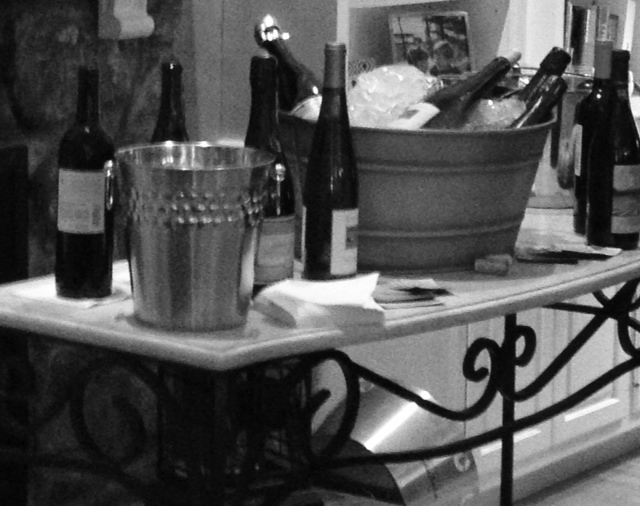
When we received the call to help with a private wine tasting to be held in November, naturally an Autumnal theme came to mind. But with Thanksgiving not so far off, the event also provided the perfect opportunity to introduce guests to some stellar wines they could keep in mind for their own festivities - and would be sure to WOW their own friends and family come Turkey Time.
In classic form, we started the event with a sparkling wine to set the tone for the evening and whet everyone's whistles.
Off to a festive start, thereafter the focus was on wines that:
> Pair naturally with traditional fare &
> Are predisposed to keeping you from feeling weighed down.
A big feast is best mitigated by lifting, lower-alcohol, less-robust wines which, in their own right, never compromise on flavor or nuance. Meanwhile, there's no need to have 101 different wines on offer. We reigned in the options and focused on wines that were sure to be hits, no matter the palate in the room:
WHITE. We chose a DRY Riesling from the Finger Lakes region of upstate New York. Surprised? Most are, but Riesling can be vinified dry (like any wine!) for a stellar experience. The Riesling grape itself is actually low in sugar and high in acidity, and plays nicely in the salty/rich foods sandbox. These attributes predispose the varietal to Thanksgiving food-friendliness. Without use of oak during fermentation, the wine is 'leaner', preventing you from feeling so full, too.
Offering a DRY style also solves the Sauvignon Blanc or Chardonnay 'crisis' you may feel you face - it offers a clean, tart zip over a fleshier-textured wine satiating both preferences among guests. And everyone enjoys a pleasant surprise that the wine in their glass is actually... Riesling!
Ravines Wine Cellars' Dry Riesling adorned the tasting table during the event because it packs such power without giving up finesse - but we also chose this one over others the worldwide because it is produced domestically - and there's nothing more appropriate at Thanksgiving than to enjoy a stellar, American-made wine. (In preparing this post we discovered Eric Asimov quite agreed with our specific choice, too!)
RED. The best domestic Pinot Noir arguably comes from the Willamette Valley, Oregon. The natural cornucopia of flavors that this red grape offers especially when grown in the Willamette Valley are bar-none optimal for a classic Thanksgiving meal: cranberry, red apple skin, dried leaves and a gentle kick of spice are tasting notes we shared during the event; no doubt these are aromas and flavors predisposed to a Thanksgiving spread!
Seeking out your local fine wine shop and soliciting a Willamette Valley Pinot Noir recommendation will certainly add The WOW Factor to your table. There are both known, artisanal favorites and hidden gems among more usual suspects depending on what's available in your market. Use the holiday as an excuse to try a new to you or lesser known producer.
With these foolproof tips we know we've set your table for success! But most important, we wish you a safe, happy and healthy holiday!

 It's summer in the city and yet I am drinking just about equal parts red, white and rose. What gives? The temperature - of my red wines, that is!
Talking to people every day about wine I know there is a misconception out there that red wine shouldn't go in the fridge. Believe me when I tell you that's far from the truth. Personally speaking, I've found the notion is reinforced when you go out to eat. More often than not if you go to a nice restaurant they are missing the mark with the temperature they serve their wines; it is a challenge for them to keep their glass pours cold enough because they are often refilling glasses or uncorking new bottles and the wine either never goes back into the wine fridge due to the turnover, or it comes from too warm a place on the shelf behind the bar where it is easily accessible.
It's summer in the city and yet I am drinking just about equal parts red, white and rose. What gives? The temperature - of my red wines, that is!
Talking to people every day about wine I know there is a misconception out there that red wine shouldn't go in the fridge. Believe me when I tell you that's far from the truth. Personally speaking, I've found the notion is reinforced when you go out to eat. More often than not if you go to a nice restaurant they are missing the mark with the temperature they serve their wines; it is a challenge for them to keep their glass pours cold enough because they are often refilling glasses or uncorking new bottles and the wine either never goes back into the wine fridge due to the turnover, or it comes from too warm a place on the shelf behind the bar where it is easily accessible. We landed in the northern part of the Rheinhessen as the sun broke through the clouds "officially" and some more late-springlike (n-o-t summer) warmth with it. Tromping through the much more rolling hills/vineyards in these "conditions" was a treat. Assistant Winemaker Oliver Mueller was our guide, providing tremendous insight about their more Burgundian-like spot within the Rheinhessen appellation as well as the non-Riesling grapes they cultivate (though, of course, Riesling does have a very large presence, too). Silvaner, Weissburgunder (Pinot Blanc), Grauburgunder (Pinot Gris), Sauvignon Blanc, Merlot and (of course) Spaetburgunder (Pinot Noir) all have a home here.
 The next day took us yet still farther South. We had an appointment at
  Our vineyard tour was also astounding. In the distance the Rhine river - and France! - terraces of unique volcanic soil lay in front of us. Here, too, they employ various techinques to mitigate using too many chemicals in the vineyards. The wine bottles hanging on the line PICTURED RIGHT are filled with sugar water, to keep pests elsewhere and harmony happening naturally in the vineyards! Brilliant for its simplicity and effectiveness.
 After two full days in the Mosel it was time to go vineyard/region-hopping as we drove South through German wine country. To save time on the way to our first appointment in the Rheingau, about two hours from the Mosel, we took a car ferry (so cool!) across the Rhine River. It deposited us on the other bank just down the slope from Josef Leitz's winery. (Perhaps starting with the ferry experience itself, the visit at Leitz offered not just great wine tasting, but also a terrific lesson in German history - e.g. ferries keep transport efficient and fluid, as many key bridges were destroyed in World War II).
We found Johannes Leitz (said "Lights" - the winery is named for his father Joseph, who died when Lietz was only 2 years old) with his gardening gear on, wheelbarrow in hand. He quickly terminated his home gardening duties, ushered us into his immaculate tasting room and jumped right into a detailed discussion about the Rheingau; terrific photos told the story of its unique terroir, including the microclimates and varied soil types that 'co-exist' just meters from each other. (I HIGHLY encourage you to visit his
After two full days in the Mosel it was time to go vineyard/region-hopping as we drove South through German wine country. To save time on the way to our first appointment in the Rheingau, about two hours from the Mosel, we took a car ferry (so cool!) across the Rhine River. It deposited us on the other bank just down the slope from Josef Leitz's winery. (Perhaps starting with the ferry experience itself, the visit at Leitz offered not just great wine tasting, but also a terrific lesson in German history - e.g. ferries keep transport efficient and fluid, as many key bridges were destroyed in World War II).
We found Johannes Leitz (said "Lights" - the winery is named for his father Joseph, who died when Lietz was only 2 years old) with his gardening gear on, wheelbarrow in hand. He quickly terminated his home gardening duties, ushered us into his immaculate tasting room and jumped right into a detailed discussion about the Rheingau; terrific photos told the story of its unique terroir, including the microclimates and varied soil types that 'co-exist' just meters from each other. (I HIGHLY encourage you to visit his  The first stop on our tour was the Mosel - probably the most well-known German wine producing region, and best known for its Riesling. I've joked that I would never want to work harvest in the Mosel because the slopes are so bloody steep and narrow that I would put down my bucket of grapes (hand-harvesting is the only way to do it as no machine could manage the incline) and accidentally kick it over with my foot, sending hundreds of dollars down the hill with it. Having been there now, I can say that even as a fairly agile human, I would definitely not sign up first for the task. And it is oh-so-precious fruit indeed.
 AJ Adam was next on our Mosel tour - a recommendation from Konstantin Weiser on Day 1 of the trip. We took our chances and popped by, catching Andreas coming home from the vineyards by tractor for a little lunch break. Two hours later we had tasted a delicious (ample) sampling of Rieslings from his portfolio. A family resemblance was present among these wines also - a ripeness of fruit cut with nearly searing acidity and a wet-stone-meets-talc-like minerality texture on the tongue. These wines were compelling for their sleek precision - yet elegance!